Connect with us

Art

Scumbling Mastery: The Ultimate Guide to the Broken Color Technique for Artists and Decorators

Published

on

scumbling

Introduction

In the vast and intricate world of artistic expression, few techniques possess the power to transform a flat, lifeless surface into a vibrant, textural masterpiece quite like scumbling. Turner, the atmospheric depth of Rembrandt’s portraits, and the shimmering water lilies of Claude Monet. While often confused with its transparent counterpart, glazing, scumbling operates on a distinct principle of optical illusion and textural complexity. It is a technique that allows the artist to work with an underlying layer of paint rather than simply covering it up, creating a “broken” effect that results in a surface teeming with life and visual intrigue.

This comprehensive guide will demystify the art of scumbling, taking you from its historical roots and technical definitions through to practical applications, whether you are an oil painter seeking to add depth to your landscapes or a decorative artist aiming to master faux finishes like wood graining. We will explore the materials required, the step-by-step process, and how this dry-brush technique can elevate your work by enhancing color, texture, and atmosphere. By the end of this article, you will not only understand what scumbling is but also possess the knowledge to confidently wield this powerful tool in your own creative endeavors.

What is Scumbling? A Complete Definition

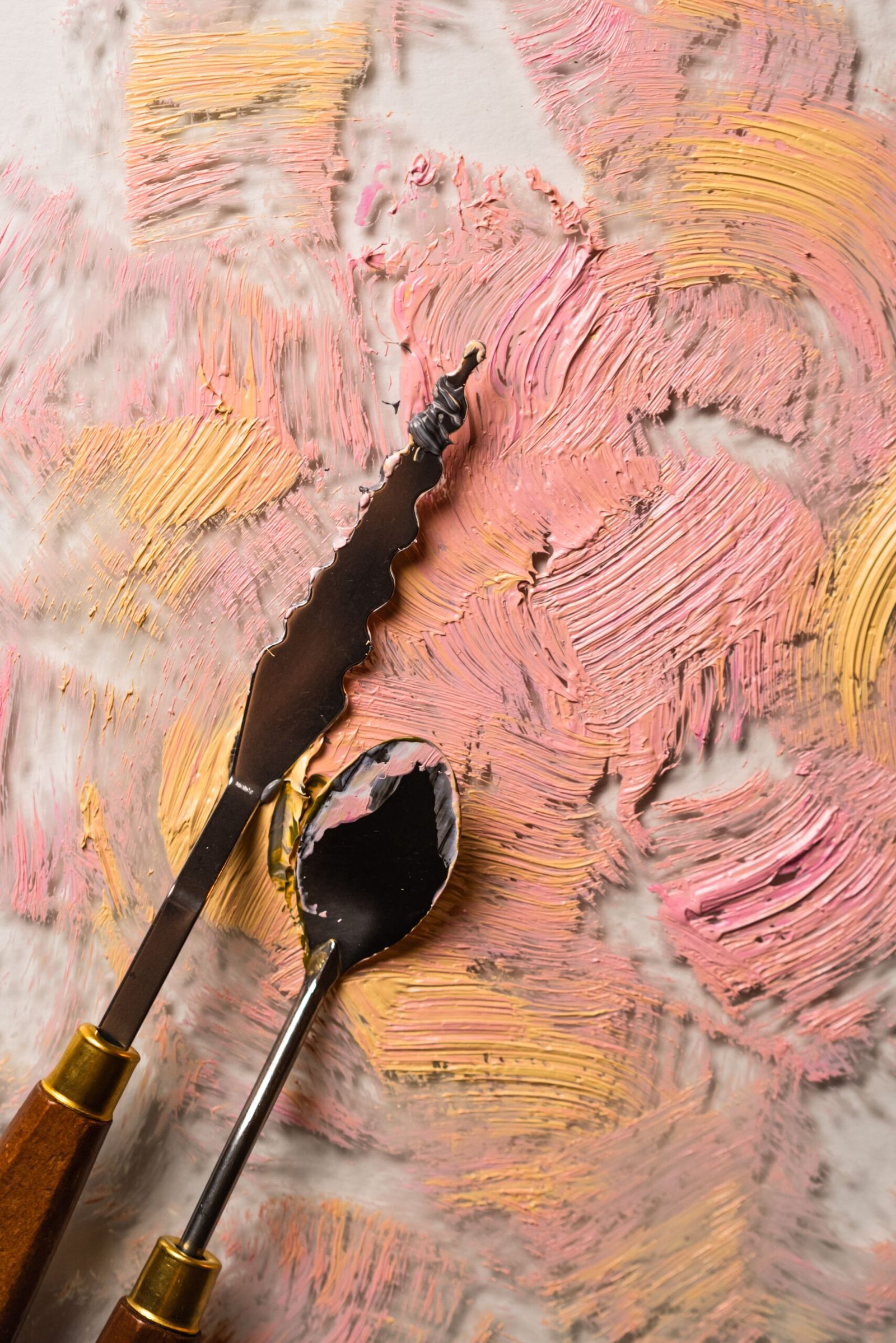
At its core, scumbling is a painting technique where a thin, semi-opaque or opaque layer of paint is applied over a dry, existing layer of paint in a way that allows the underpainting to remain partially visible. Unlike a glaze, which is a smooth, unbroken, transparent film, a scumble is a “broken” application. This broken quality is achieved by dragging a brush that is relatively dry and lightly loaded with paint across the textured surface of the canvas or panel. The result is that the paint catches on the peaks of the canvas weave or brushwork, leaving the valleys exposed, thereby creating a complex, textured effect.

The term itself has an evocative origin, deriving from the 17th-century word “scum,” meaning “to skim”. This perfectly describes the action: skimming the surface with a dry brush to deposit a fragmented layer of color. It is important to distinguish scumbling from dry brushing, as while they are related, they are not identical. Dry brushing typically involves a brush with very little paint used to create sharp, linear highlights. Scumbling, in contrast, often uses more paint and a variety of brush movements—from circular scrubbing to dragging—to create a broad, atmospheric, and textural effect that is less about sharp lines and more about diffuse, broken color. The visual interaction between the scumbled layer and the layer beneath creates a phenomenon known as optical color mixing, where the viewer’s eye blends the two colors together from a distance, generating a more vibrant and complex hue than could be achieved with a single, flat, mixed color.

A Brief History of Scumbling: From the Old Masters to Modern Art

The roots of scumbling can be traced back to the 16th-century Renaissance, a period of unparalleled innovation in oil painting techniques. Venetian masters like Titian and Tintoretto were among the early pioneers, utilizing scumbling to create the illusion of soft, luxurious fabrics and the subtle gradations of flesh tones.

The technique experienced a glorious evolution in the 18th and 19th centuries with the Romantic and Impressionist movements. J.M.W. Turner used scumbling to dramatic effect, applying layers of broken, atmospheric color to create his breathtaking skies and seascapes, allowing the underpainting to simulate the effect of light bursting through clouds. John Constable similarly employed scumbling for his dynamic skies, but with a heavier, more somber touch.

The Impressionists, most notably Claude Monet, transformed scumbling into a primary vehicle for their signature style. In his Haystacks and Rouen Cathedral series, Monet built up layer upon layer of scumbled strokes across the canvas, creating a field of vibrating, broken color that captured the fleeting effects of light and atmosphere. This approach, where the physical texture of the paint and the optical mixing of colors are paramount, became a hallmark of Impressionism. Beyond the fine arts, scumbling has also played a critical role in architectural and decorative painting, particularly in faux finishing. This “decorative scumbling” has been used for centuries to create realistic wood grains, marbles, and textured wall finishes, tying the aesthetic of a room together.

When to Use Scumbling: Key Applications and Techniques

Scumbling in Oil Painting

In oil painting, scumbling is an indispensable tool for creating atmosphere, depth, and texture. It is particularly effective for painting “soft” or diffuse subjects. 

Scumbling in Decorative Arts

In the decorative arts, the term “scumble” often refers to a specific type of oil-based glaze used for creating decorative paint effects.

How to Scumble: A Step-by-Step Guide

Mastering the scumbling technique requires an understanding of the materials and process.

1. Preparation and Materials

  • Surface: The technique works best on a textured or rough surface.  For decorative purposes, a non-absorbent painted surface with a slight sheen is often used.

  • Paints: For oil painters, use paint straight from the tube. The paint should be stiff, not thinned with excessive medium, to prevent it from flowing smoothly into the surface’s recesses.

  • Brushes: Opt for a dry, stiff brush.  For smaller details, a worn-down bristle brush works well.

  • The Underpainting: The layer you are scumbling over must be completely dry.

2. The Application Process

  1. Load the Brush: Dip the tip of your dry brush into a small amount of undiluted paint.

  2. Remove Excess: It is vital to wipe off most of the paint. The goal is to have just enough paint on the bristles to catch on the surface’s peaks.

  3. Apply the Scumble: Drag or scrub the brush lightly over the dry surface. Use a loose hand and apply with an uneven pressure. Do not rub the paint in; instead, let it skim across the top.

  4. Work in Layers: A single scumble might be enough, but often artists build up the effect with multiple layers, allowing each to dry before applying the next. Building up layers increases the textural complexity, as seen in the works of Monet.

3. Important Tips to Remember

  • Color Choice: A scumble is typically a lighter color applied over a darker one for highlights, but the technique can also involve scumbling a complementary color over another to create a vibrant, vibrating effect.

  • Avoid Blending: The goal is not to blend the colors together but to create a textured, broken layer. If the paint seems too smooth, you are likely using too much paint or a brush that is too wet.

  • Practice: It is advisable to create small studies to isolate and practice the technique before applying it to a major piece.

Scumbling vs. Glazing: Understanding the Key Differences

However, they are opposites in practice and effect. A glaze is a transparent film of paint that is applied smoothly over an underpainting. It is used to deepen shadows, build up rich tonal ranges, and create a glowing quality.

scumble, on the other hand, is an opaque or semi-opaque layer of paint applied in a broken fashion. Instead of traveling through a film, the light is scattered by the textured, fragmented layer. The result is a reduction in contrast, a soft, diffused look, and a lively, textured surface.

Conclusion

Scumbling stands as a testament to the enduring power of simplicity in art. It is a technique that relies not on complex formulas or expensive tools, but on a profound understanding of how paint, surface, and light interact. From the atmospheric skies of Turner to the textured drapery of Titian, scumbling has been the vehicle for some of the most breathtaking visual effects in art history.

Frequently Asked Questions (FAQ)

Q1: What is the purpose of scumbling?

A: The primary purpose of scumbling is to create optical and textural complexity in a painting. It is used to create atmosphere, diffuse light, soften transitions, and add a lively, luminous surface quality to artwork. In decorative arts, it is used to create faux finishes like wood grain and marble.

Q2: What is the difference between scumbling and glazing?

A: Scumble is essentially the opposite of a glaze.

Q3: Is scumbling and dry brushing the same thing?

A: While they are similar and both use a dry brush, they are not identical. Dry brushing typically involves a very small amount of paint on the brush to create thin, sharp, linear highlights. Scumbling, especially in fine art, uses more paint in a broader, more “scrubbing” or dragging action to create a diffuse, atmospheric, and textural effect over a larger area.</span>

Q4: Can you scumble with acrylic paint?

A: Yes, scumbling can be done with acrylics, although the technique is most commonly associated with oil painting. 

Continue Reading

Art

Graffiti and Street Art: From Vandalism to High-Value Cultural Currency

Published

on

graffiti and

Introduction

The urban landscape serves as a canvas for a complex dialogue between order and chaos, legality and rebellion, private property and public expression. At the heart of this dialogue lies graffiti and its more commercially accepted cousin, street art.  The Deep Roots of a Rebellious Practice.

To understand graffiti and its relationship to street art, one must first look at its long and storied history. While we often associate graffiti with the spray-painted tags of 20th-century New York, the act of inscribing on public surfaces is a practice as old as civilization itself. The term “graffiti” is derived from the Italian word graffiare, meaning “to scratch,” and historic works can be traced back to the cave paintings of 30,000 BCE and the scratched inscriptions found on ancient monuments . These early examples, from Viking markings in eighth-century churches to political slogans in ancient Rome, demonstrate a fundamental human urge to leave a mark, communicate a message, and assert one’s existence in a public space . Contemporary graffiti as we know it, however, began to take shape in the late 1960s.

Defining “Graffiti and Street Art”: A Critical Distinction

While often used interchangeably in casual conversation, graffiti and street art are distinct artistic movements with different goals, audiences, and techniques. The primary distinction between graffiti and street art often lies in their intent and legality. Graffiti, in its purest form, is an illegal act of self-expression. It is a coded language primarily meant to be read and judged by other writers, functioning as an “internal dialogue” within a subculture 

This distinction is crucial because it influences how each form is perceived by the public and authorities. Street art, particularly large-scale murals, has become a tool for urban regeneration, attracting tourists and revitalizing neglected areas . City councils and businesses often commission street artists, seeing it as a legitimate form of public art that can boost local economies . This is the “street art” often highlighted in searches for “best street art locations” and “street art photography tours” 

The “Surface Commons” and the Politics of Visibility

Beyond the art-vs-vandalism debate, graffiti and street art raise profound questions about who controls our shared urban spaces.

The New Frontier: Valorization, Museums, and the “Sell-Out”

One of the most fascinating developments in the world of graffiti and street art is its journey from the streets to the galleries, a process of “valorization” that has radically altered its place in society . What was once a punishable act of vandalism is now a highly lucrative art market. This paradox creates a significant tension within the movements themselves. 

Conclusion

The story of graffiti and street art is a mirror reflecting our society’s ongoing struggle with freedom, order, and community. 

Frequently Asked Questions (FAQ)

1. What is the main difference between graffiti and street art?
The main difference lies in intent and audience. Graffiti is primarily a self-expressive and internal communication tool for other graffiti writers, often created illegally to gain status.

2. Is all graffiti illegal?
Yes, by definition, what makes a marking “graffiti” in the modern context is often that it is done without permission. 

3. How did graffiti start?
Contemporary graffiti as we know it today emerged in the late 1960s in Philadelphia and New York City. It was a creative practice where young people would write their names (or “tags”) in public spaces to gain notoriety.

4. Why has street art become so popular?
>>>>>>>>>>>>>>>>>>>>>>>>>>>>>>>>>>>>>>>>>>>>>>>>>Street art’s popularity stems from its accessibility and its ability to engage directly with the public outside of traditional gallery settings. It can be politically charged, socially conscious, or simply aesthetically pleasing, often breathing new life into neglected urban areas.“>.

5. Is graffiti considered a form of art or a crime?
This is the central debate. Legally, it is often considered a crime (vandalism). Culturally, it is widely considered an art form.


Continue Reading

Art

The Art of Influence: Mastering Emphasis in Art to Command Attention and Elevate Your Work

Published

on

emphasis in art

Introduction

In the vast and ever-evolving world of visual expression, the ability to capture and hold a viewer’s attention is the ultimate currency. For an artist, it is not enough to simply create; one must also guide perception. This is where the principle of emphasis in art—one of the fundamental principles of design—becomes essential. In essence, emphasis is the strategic technique used to create a focal point, drawing the viewer’s eye to a specific area of the artwork first .

The Core Concept: What is Emphasis and Why Does It Matter?

To truly understand emphasis, it is crucial to differentiate it from the Elements of Art, which are the basic visual components like line, shape, color, and texture. The Principles of Art, on the other hand, are the rules and techniques artists use to organize those elements . Emphasis, as a principle, is the act of giving dominance to one particular area of a piece, ensuring it stands out above all others . This dominant area, known as the focal point, serves as the entry point to the artwork, telling the viewer, “Start here. This is the most important part.” This is often achieved through the use of subordination, where the artist consciously de-emphasizes other areas of the canvas, perhaps by muting colors, softening details, or simplifying textures, to allow the focal point to shine with maximum impact .

Essential Keywords for Understanding and SEO

To maximize the article’s searchability and engage readers effectively, we must integrate key search terms that art enthusiasts and creators use to find this information. The following keywords are woven throughout the article to ensure it ranks well on Google while maintaining natural, compelling prose.

  • Emphasis in Art

  • Principle of Art

  • Focal Point

  • Visual Weight

  • Contrast in Art

  • Color Theory

  • Composition Techniques

  • Creating Emphasis

  • Art Principles

  • Elements and Principles of Design

Strategic Techniques: How to Create Emphasis in Your Artwork

Artists have a rich toolkit at their disposal to create emphasis, often employing multiple techniques in concert to achieve a powerful effect . The most effective method is often Contrast. When an element is starkly different from its surroundings, it instinctively attracts attention. This is most famously seen in the use of color. A splash of bold red against a muted, gray background will create a powerful center of interest, a technique frequently used in Renaissance paintings to draw the eye to a saint’s robe or a central figure. Similarly, a highly detailed area in an otherwise soft and impressionistic piece will become a visual anchor Placement is another critical factor; our eyes are naturally drawn to compositions that break from the norm. Placing a subject off-center, perhaps using the Rule of Thirds, can create more visual tension and interest than a central, static placement . The artist can also use Isolation and Leading Lines; separating a subject from a chaotic group or using implied lines—like the curve of a road or the angle of a figure’s arm—can direct the viewer’s gaze directly to the focal point . Even subtle techniques, like adjusting the Depth of Field to make the foreground sharp and the background blurry, can be a powerful tool for establishing emphasis, a tactic often seen in photography . All these techniques work together to manage the visual weight of a piece, ensuring a harmonious yet dynamic viewing experience.

Application in the Digital World: Emphasis and SEO

The principle of emphasis is not only a cornerstone of physical art but also a surprisingly effective guide for digital marketing and SEO. In the visually-driven world of online content, the same rules apply: you must direct a viewer’s attention to the most important piece of information to get your message across. This begins with Titles and Headings. On a website or a portfolio, the title of an artwork is your primary focal point.  The title must be clear and descriptive, capturing both the essence of the piece and its SEO potential . Furthermore, the visual emphasis you create in your artwork translates perfectly into a strong, branded Visual Hierarchy for your entire website, from the layout of your homepage to the arrangement of images in your portfolio. Just as an artist uses contrast to create a focal point, you can use design elements like large images, bold text, and strategically placed Call-to-Action buttons to guide visitors towards desired actions, such as making a purchase or signing up for a newsletter. This is not just good art; it is good marketing. 

Conclusion

The principle of emphasis in art is a cornerstone of compelling visual art, transforming a simple arrangement of elements into a powerful, communicative experience. In the modern era, this understanding of visual hierarchy and focal points extends far beyond the canvas.

Frequently Asked Questions (FAQ)

1. What is the difference between the “Elements of Art” and the “Principles of Art”?
>>>>>>>>>>>>>>>>>>>>>>>>>>>>>>>>The elements of art are the basic building blocks used to create a piece, such as line, shape, color, and texture. The principles of art are the rules used to organize these elements into a cohesive and effective composition. Emphasis is a principle of art, like balance, movement, and unity, that helps to create order and guide the viewer’s eye “”&gt;.

2. Can a work of art have more than one focal point?
Yes, a piece can have more than one area of emphasis, creating multiple focal points. However, artists typically ensure one focal point is dominant over the others to avoid confusing the viewer’s eye.

3. Is contrast the only way to create emphasis in an artwork?
No, while contrast is one of the most powerful and frequently used techniques, it is not the only one. Artists also use contrast in color, value, and texture to create emphasis. Other key techniques include strategic placement of a subject, the use of leading lines to draw the eye, isolation of the subject from other elements, and the use of scale or proportion to make an element stand out “”&gt;.

4. How does understanding emphasis in art help with SEO?
Understanding visual hierarchy and emphasis is crucial for creating compelling digital content.

5. Do all successful artworks use emphasis?
>>>>>>>>>>>>>>>>>>>>>>>>>>>>>>It is a common argument that all worthy works of art employ emphasis to some degree, as it provides a sense of direction and purpose. lass=””>Campbell’s Soup Cans, where the repeated, near-identical imagery across multiple canvases deliberately lacks a single focal point, creating a different kind of visual impact through repetition and uniformity rather than a singular emphasis ass=””>.

Continue Reading

Trending